
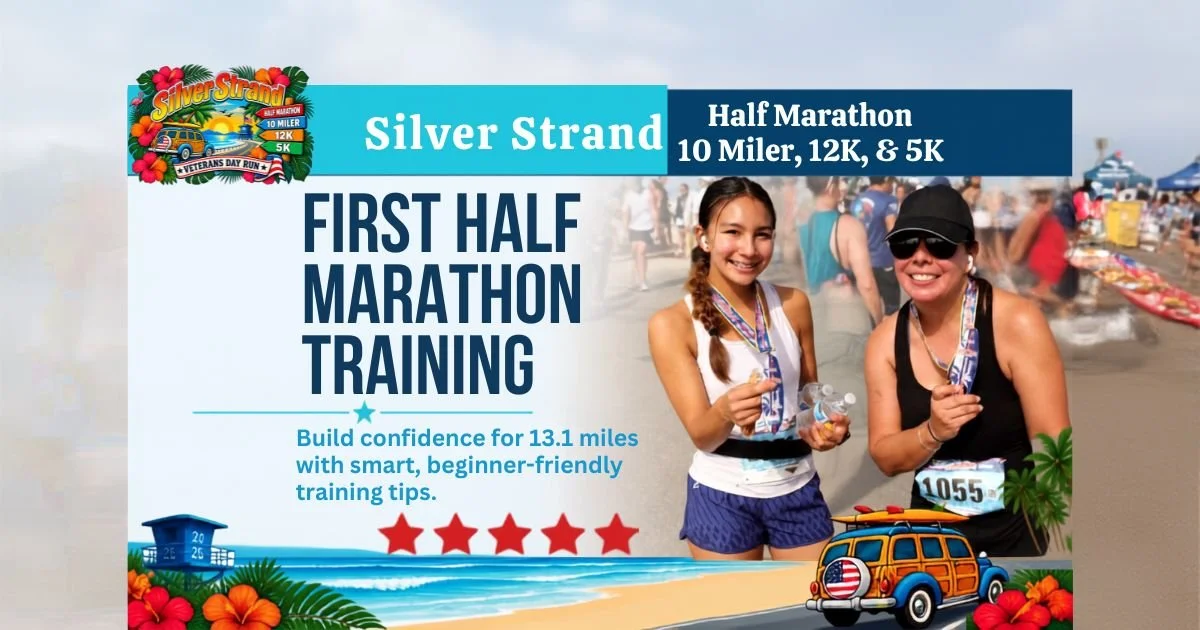
How to Train for Your First Half Marathon
Training for your first half marathon is a big goal, but it should not feel impossible. The half marathon is long enough to feel like a true endurance achievement, but realistic enough for new runners when the training is steady, patient, and well planned.
The key is consistency. You do not need to run hard every day. In fact, most first-time half marathoners do better when they build a repeatable weekly rhythm: a few shorter runs, one longer run, and enough recovery to absorb the work.
The goal is not to survive training. The goal is to arrive at race day healthy, confident, and ready to enjoy the experience.
Before You Start
A beginner half marathon plan works best if you can already run or run-walk for about 30 minutes, three days per week. You do not need to be fast. You do not need to run continuously. But you should be comfortable spending time on your feet.
If 30 minutes feels like too much right now, spend a few weeks building up with run-walk intervals before starting a half marathon plan. That small foundation will make the training safer and more enjoyable.
Coach Jeff Galloway, known for popularizing the run-walk-run method, has helped many first-time half marathoners finish comfortably by using planned walk breaks from the beginning. Hal Higdon's beginner half marathon training also starts with manageable weekly runs and gradually builds the long run over 12 weeks. The common theme is simple: build slowly, stay consistent, and do not try to prove fitness every day.
The Weekly Rhythm
Most first-time half marathoners can train well with three running days per week:
One easy run
One easy run with short pickups or gentle steady effort
One weekend long run
You can add walking, cycling, swimming, yoga, or strength training on other days, but you do not need to run every day to finish a half marathon.
A simple week might look like this:
Monday: Rest or gentle walk
Tuesday: Easy run or run-walk
Wednesday: Strength training or cross-training
Thursday: Easy run with short pickups
Friday: Rest
Saturday: Long run
Sunday: Recovery walk, easy bike, or rest
If your schedule is better with long runs on Sunday, that is fine. The exact days matter less than keeping the pattern consistent.
12-Week First Half Marathon Training Plan
This plan is for someone who can already run or run-walk about 30 minutes. If you are newer than that, start with a 5K or 10K base first.
Week 1: Tuesday 30 min easy, Thursday 30 min easy, weekend long run 3 miles. Keep everything comfortable.
Week 2: Tuesday 30 min easy, Thursday 35 min easy, weekend long run 4 miles. Run-walk is fine.
Week 3: Tuesday 35 min easy, Thursday 30 min plus 4 short pickups, weekend long run 5 miles. Practice relaxed pacing.
Week 4: Tuesday 30 min easy, Thursday 30 min easy, weekend long run 4 miles. Cutback week.
Week 5: Tuesday 35 min easy, Thursday 40 min easy, weekend long run 6 miles. Start testing breakfast.
Week 6: Tuesday 35 min easy, Thursday 30 min plus pickups, weekend long run 7 miles. Practice water and fuel.
Week 7: Tuesday 30 min easy, Thursday 35 min easy, weekend long run 5 miles. Recovery week.
Week 8: Tuesday 40 min easy, Thursday 35 min steady, weekend long run 8 miles. Keep the long run slow.
Week 9: Tuesday 40 min easy, Thursday 30 min plus pickups, weekend long run 9 miles. Use race-day shoes.
Week 10: Tuesday 35 min easy, Thursday 40 min easy, weekend long run 10 miles. Peak long run.
Week 11: Tuesday 30 min easy, Thursday 25 to 30 min easy, weekend long run 6 to 7 miles. Taper begins.
Week 12: Tuesday 20 to 30 min easy, Thursday 15 to 20 min shakeout, race day. Start conservative.
This plan builds gradually, includes cutback weeks, and gives your body time to adapt. Your longest run does not need to be 13.1 miles. Many beginners are ready for race day after a 10-mile long run because the final race-day boost comes from tapering, adrenaline, aid stations, and the confidence built over weeks of training.
What Does Easy Mean?
Easy pace means conversational pace. You should be able to talk in short sentences. If you are gasping, forcing the pace, or staring at your watch the whole time, slow down.
Easy running builds your aerobic base, strengthens your legs, and teaches your body to use energy efficiently. Many endurance coaches, including researchers like Stephen Seiler, have shown that successful endurance training usually includes a lot of lower-intensity work with only a smaller amount of harder running.
For a first half marathon, most of your training should feel controlled. You are not trying to win Tuesday. You are trying to build toward race day.
What Are Short Pickups?
Short pickups are brief, controlled increases in speed during an easy run. They are not sprints, and they should not leave you exhausted. Think smooth and quick, not all out.
Here is how to do them:
Warm up with 10 to 15 minutes of easy running or run-walk.
Speed up slightly for 15 to 30 seconds.
Slow back down to an easy jog or walk for 1 to 2 minutes.
Repeat 4 times.
Finish the rest of the run easy.
Pickups help your legs practice a quicker rhythm without turning the workout into a hard speed session. For first-time half marathoners, they are a simple way to build confidence, improve running form, and keep training from feeling stale.
Can You Use Run-Walk?
Yes. Run-walk is a smart strategy, especially for first-time half marathoners. Planned walk breaks can help control effort, reduce fatigue, and keep your form from falling apart late in the race.
The key word is planned. Do not wait until you are exhausted. Choose an interval early and practice it in training.un 2 minutes, walk 1 minute
Run 4 minutes, walk 1 minute
The best ratio is the one you can repeat comfortably. If your running segments get slower and harder every time, shorten the run or lengthen the walk.
For the Silver Strand course, a steady run-walk rhythm can work very well because the route rewards even pacing.
Use Your Watch to Track Run-Walk Intervals
One of the easiest ways to follow a run-walk plan is to let your watch do the tracking for you. Many fitness watch brands, including Garmin, have run-walk or interval alert settings. You enter your run time and walk time, and the watch beeps or vibrates when it is time to switch.
That means you do not have to stare at your watch, count minutes in your head, or worry about missing the next walk break. You can focus on pacing, breathing, staying relaxed, and enjoying the race.
For example, you might set your watch for:
Run 30 seconds, walk 90 seconds
Run 1 minute, walk 1 minute
Run 2 minutes, walk 1 minute
Run 4 minutes, walk 1 minute
Garmin explains its walk break alert setup here: Garmin walk break alert instructions.
Practice Fuel Before Race Day
For a 5K, many runners can get by without thinking much about fueling. For a half marathon, it matters more.
Once your long runs reach about 6 to 7 miles, start practicing what you will do on race morning. Test your breakfast, water, and any gels, chews, or sports drink you plan to use.
A simple race-morning breakfast might be:
Bagel or toast with peanut butter
Oatmeal with banana
Banana and yogurt
English muffin with honey
Rice cake or simple bar if your stomach prefers lighter food
Keep race morning boring. Familiar food wins.
During longer runs, many runners benefit from taking fuel every 35 to 45 minutes. You do not need to overcomplicate it, but you should know what your stomach tolerates before race day.
Most important: never try new nutrition on race day. If you have not used a gel, chew, bar, drink mix, or electrolyte product during training, race morning is not the time to test it. New fuel can cause stomach cramps, nausea, bathroom stops, or energy crashes.
If you already know what works for you, bring your own fuel and use that. It is perfectly fine to skip gels, chews, or sports drink offered at an aid station if you have not trained with that product. You can still take water, but stick with the nutrition your body already knows.
Strength Training Helps
Strength training does not need to be intense or complicated. Two short sessions per week can help support your hips, glutes, calves, hamstrings, and core.
Good beginner exercises include:
Bodyweight squats
Step-ups
Glute bridges
Calf raises
Side planks
Dead bugs
Bird dogs
Keep strength work controlled. You should finish feeling stronger, not wrecked. Avoid starting a brand-new heavy strength routine close to race day.
What If You Miss a Week?
Life happens. You might get sick, travel, deal with work, or miss a long run. Do not panic, and do not try to cram missed mileage into the next week.
If you miss a few days, simply continue with the plan. If you miss a full week, repeat the previous week or shorten the next long run. The biggest mistake is trying to make up every missed mile and ending up injured.
Consistency over time matters more than a perfect training calendar.
How to Know You Are Ready
You are probably ready for your first half marathon if:
You can complete an 8 to 10 mile long run
You know what shoes and socks you will wear
You have practiced breakfast and hydration
You know what fuel works for your stomach
You can control your pace early
You understand your run-walk plan, if using one
You arrive healthy, not exhausted
Race day does not require perfect training. It requires enough preparation, a smart pace, and the patience to start easier than you think you need to.
Race Day Strategy
The first few miles should feel almost too easy. That is normal. The excitement of the start line can make you run faster than planned, but the half marathon rewards patience.
Break the race into three parts:
Miles 1 to 4: Stay relaxed and controlled.
Miles 5 to 9: Settle into rhythm, hydrate, and fuel.
Miles 10 to 13.1: Gradually push if you feel good.
If you start too fast, the final miles can feel much harder than they need to. If you start controlled, you give yourself the chance to finish strong.
Your first half marathon is not about perfection. It is about learning, showing up prepared, and crossing the finish line knowing you did something that once felt far away.
For the Silver Strand Veterans Day Run, that finish line comes with ocean air, coastal views, and the energy of a race day built for runners of all levels. Train patiently, trust the process, and give yourself a race you can be proud of.
Sources and expert grounding: Jeff Galloway run-walk-run guidance; Hal Higdon Novice Half Marathon training principles; Nike Run Club half marathon training guidance; Mayo Clinic training and recovery recommendations; Stephen Seiler endurance intensity distribution research; Garmin walk break alert instructions.


